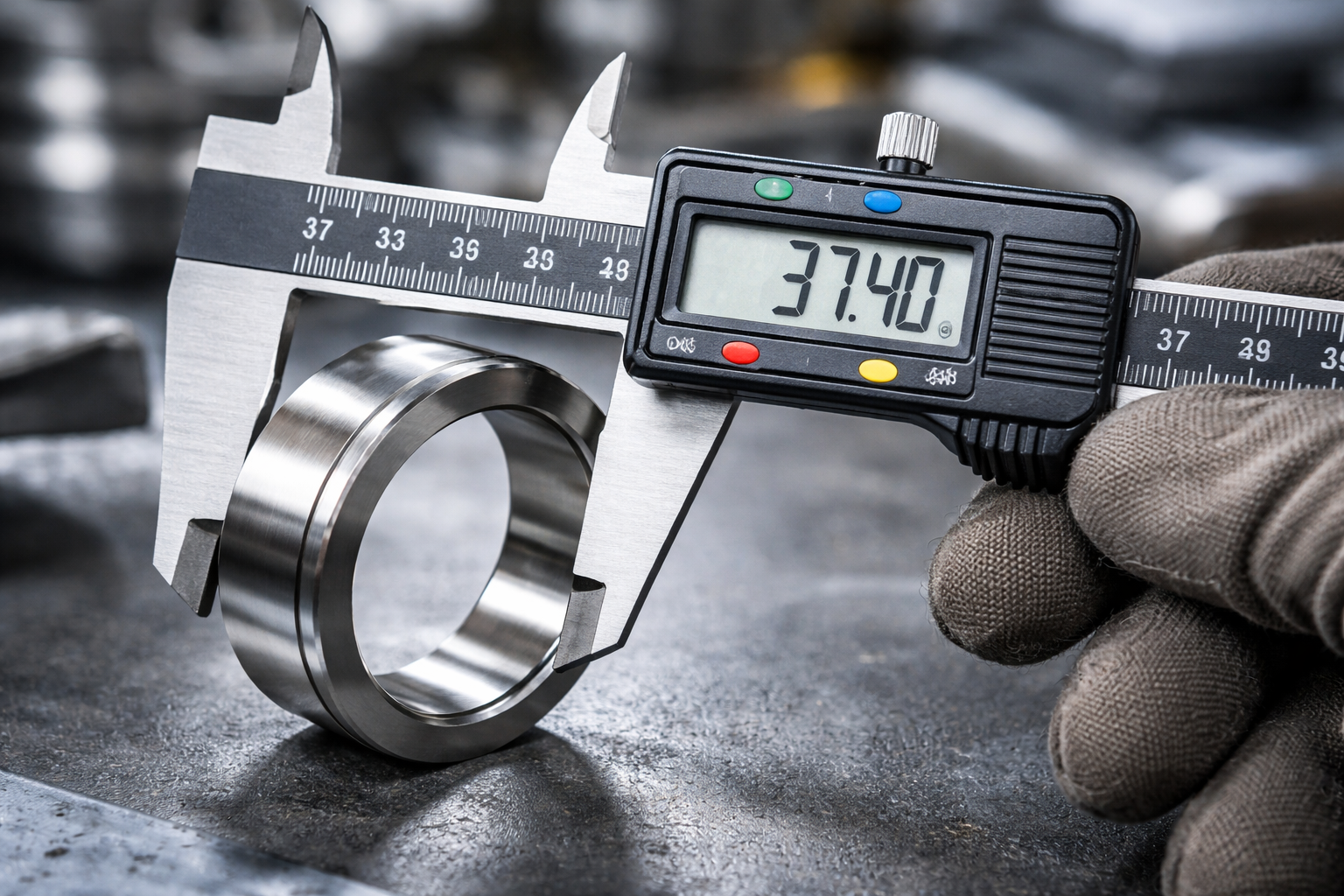
Measurements often appear simple on the surface, yet they quietly determine whether machines function smoothly, products feel premium, or systems fail under stress. The measurement 37.4×4.9 is a perfect example. At a glance, it seems like a straightforward pair of numbers. In reality, it represents a deliberate choice shaped by engineering logic, functional requirements, and real-world constraints.
Across industries—from manufacturing and mechanical design to product engineering and technical assembly—dimensions like 37.4×4.9 act as silent decision-makers. They influence how parts interact, how long products last, and how reliably systems perform. This article explores 37.4×4.9 in depth, unpacking its meaning, applications, limitations, and importance without relying on external searches. Everything you’ll read here is grounded in practical reasoning, technical understanding, and real-world logic.
Understanding the Structure of the 37.4×4.9 Measurement
At its core, 37.4×4.9 is a dimensional expression that defines two physical attributes of an object. While the exact interpretation depends on context, it most commonly refers to length by width, outer diameter by thickness, or overall size by depth. The presence of decimals immediately signals precision rather than approximation.
Measurements with decimal points are rarely accidental. They typically result from careful calculations where fractions matter. In engineering and manufacturing, this level of precision often indicates that the part must interact with other components in a controlled way. A slight deviation could affect alignment, movement, or structural integrity. Therefore, 37.4×4.9 is best understood not as a rough estimate, but as a deliberate and intentional specification.
Why Precision Matters More Than the Numbers Themselves
Precision is not just about being accurate—it’s about being consistently accurate. When a component is designed to be 37.4×4.9, that dimension exists to satisfy multiple constraints at once. These constraints may include spatial limitations, mechanical stress, ergonomic comfort, or compatibility with standardized systems.
In many applications, components are manufactured in large quantities. If each piece deviates slightly from 37.4×4.9, even within a small range, the cumulative effect can be significant. Assemblies may require additional force, experience uneven wear, or fail earlier than expected. Precision ensures predictability, and predictability is essential for quality control and long-term performance.
The Role of Tolerances in Real-World Use of 37.4×4.9
No manufactured object is perfectly exact. This is where tolerances come into play. Tolerances define how much a dimension like 37.4×4.9 is allowed to vary while still being acceptable. A tight tolerance suggests high-performance or safety-critical use. A looser tolerance may indicate a non-critical or flexible application.
Understanding tolerances transforms 37.4×4.9 from a static number into a functional range. For example, a component designed to slide into a housing may require a tolerance that allows movement without friction. Conversely, a part intended to lock or seal may require extremely tight tolerances to prevent leakage or vibration. Without considering tolerance, the measurement alone tells only half the story.
Common Applications Where 37.4×4.9 Appears
The measurement 37.4×4.9 appears in a wide variety of practical contexts. In mechanical systems, it may describe a shaft, spacer, ring, or structural insert. In product design, it could define the dimensions of a casing, grip, or internal support. In industrial environments, it may specify the size of a component that interfaces with standardized equipment.
What unites these applications is the need for consistency. The same measurement may be used repeatedly because it solves a specific problem efficiently. Over time, such dimensions become informal standards within certain workflows or industries. Once adopted, they tend to persist unless there is a compelling reason to change them.
Fit and Compatibility: How 37.4×4.9 Interacts With Other Components
Fit is where measurements truly come alive. A dimension like 37.4×4.9 is rarely standalone. It exists in relation to other parts, surfaces, and systems. Compatibility depends on how these dimensions interact under real conditions, including motion, pressure, and environmental changes.
For example, thermal expansion can cause materials to grow or shrink. A component sized 37.4×4.9 at room temperature may behave differently under heat or cold. Designers often account for these factors during the planning stage. This ensures that compatibility remains intact even when conditions change. Proper fit reduces stress, noise, and wear, all of which contribute to longer service life.
Material Considerations and Their Impact on 37.4×4.9
Material choice plays a crucial role in how 37.4×4.9 performs. A rigid material such as metal will maintain its shape under load, while a flexible material like rubber or plastic may deform. The same measurement can therefore produce very different outcomes depending on what the object is made from.
Surface finish also matters. A smooth surface may slide easily, while a rough surface may create friction even if dimensions are identical. When designers specify 37.4×4.9, they often consider not just the size, but how that size behaves in combination with material properties. Ignoring this relationship can lead to unexpected performance issues.
Measurement Methods Used to Verify 37.4×4.9
Accurately verifying a measurement like 37.4×4.9 requires appropriate tools and techniques. Digital calipers are commonly used for quick checks, while micrometers offer higher precision for critical components. In advanced manufacturing environments, automated measuring systems ensure consistency across large production runs.
Measurement conditions also influence accuracy. Temperature, cleanliness, and handling can all affect readings. For this reason, professional environments often use controlled conditions when measuring critical dimensions. Reliable verification ensures that every component labeled 37.4×4.9 meets the same expectations, regardless of when or where it was produced.
Mistakes and Misinterpretations to Avoid
One of the most common mistakes with 37.4×4.9 is assuming that similar measurements are interchangeable. Small differences may seem insignificant, but they can have outsized effects in precise systems. Another frequent error is neglecting orientation—confusing which dimension applies to which axis or surface.
Communication issues also cause problems. If specifications are not clearly documented, different teams may interpret 37.4×4.9 differently. This can lead to mismatched parts, rework, or delays. Clear documentation and shared understanding are essential to prevent these issues.
How to Decide If 37.4×4.9 Is the Right Choice
Determining whether 37.4×4.9 is suitable for a specific application requires thoughtful evaluation. Start by identifying the function the component must serve. Consider the forces it will encounter, the environment it will operate in, and how it interacts with surrounding parts.
Testing is often the final step. Prototypes sized 37.4×4.9 can reveal practical insights that calculations alone cannot. This hands-on validation helps confirm whether the measurement delivers the intended performance or requires adjustment. Thoughtful decision-making at this stage saves time, cost, and frustration later.
Conclusion
The measurement 37.4×4.9 may appear modest, but it represents a world of intent, precision, and practical reasoning. It embodies the careful balance between design constraints and real-world performance. From tolerances and materials to fit and compatibility, every aspect of this measurement plays a role in how systems function.
Understanding 37.4×4.9 is not just about knowing its numerical value. It’s about recognizing the thinking behind it and applying that understanding wisely. In technical fields where details matter, such insight transforms numbers into knowledge—and knowledge into reliable, lasting results.
Read also: GlobeInsightBlog – Your Trusted Source for Global Insights and In-Depth Commentary