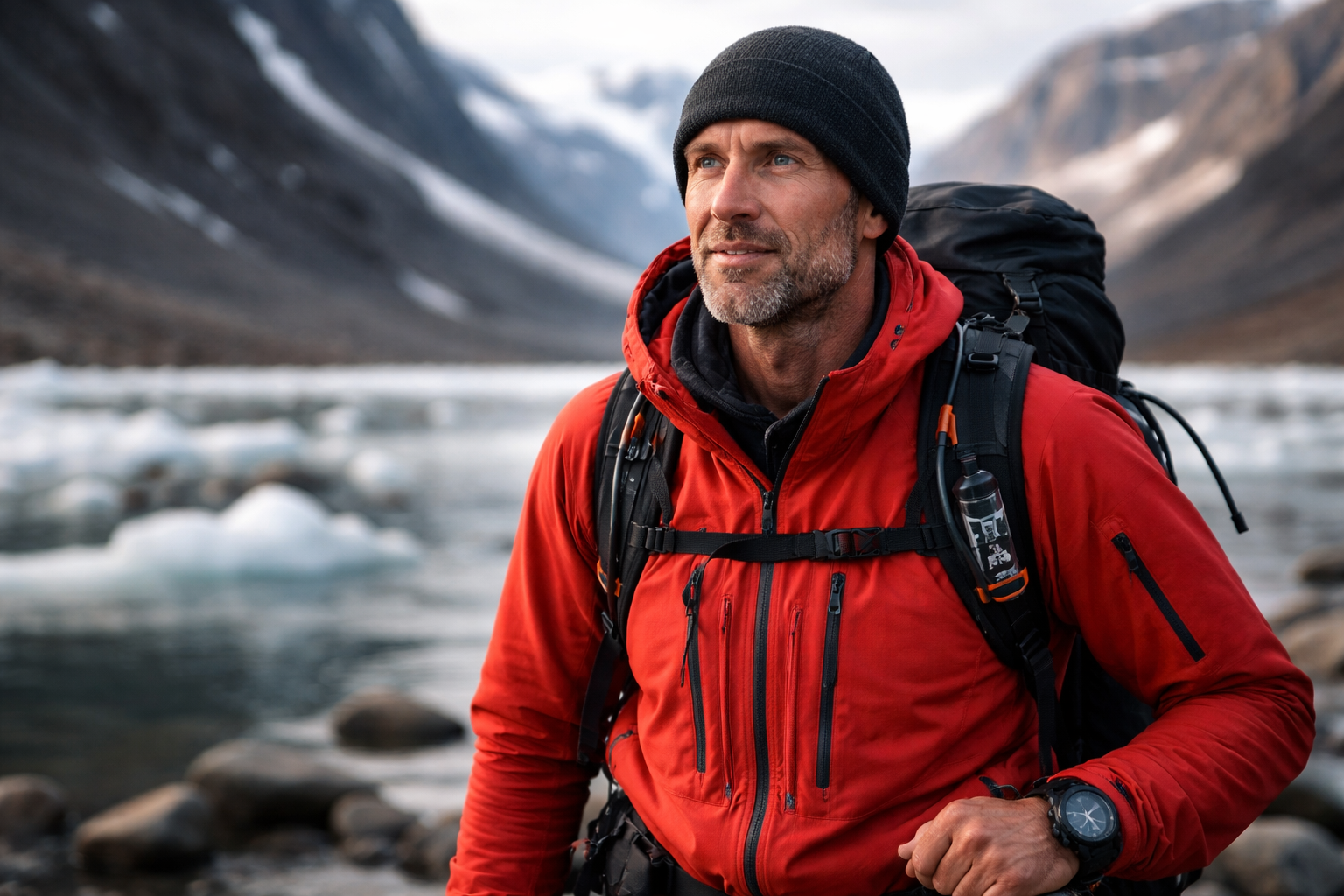
The name Mark Hines carries a quiet weight in the worlds of human performance, endurance science, and extreme adventure. It is a name associated with discipline rather than spectacle, research rather than hype, and lived experience rather than theory alone. In an era fascinated by optimization and resilience, Mark Hines stands out as someone who does not merely study the limits of the human body but repeatedly steps beyond them to understand what truly lies there.
Unlike many figures who remain confined to either academic research or athletic performance, Mark Hines occupies a rare intersection of both. His work bridges laboratory science and harsh real-world environments, making his insights uniquely grounded and deeply credible.
Who Mark Hines Is and Why He Matters
Mark Hines is best known as an exercise physiologist, university lecturer, and ultra-endurance athlete whose career blends formal scientific research with extreme physical challenges. His reputation is built on a dual identity. On one side, he is a respected academic with a deep understanding of biomechanics and neurophysiology. On the other, he is an adventurer who has tested those principles in deserts, polar regions, and long-distance endurance races.
This combination matters because endurance science often struggles with a gap between theory and practice. Mark Hines reduces that gap. He studies fatigue, movement, and resilience not only in controlled environments but also under conditions where mistakes have real consequences.
Academic Foundations and Scientific Expertise
Mark Hines’ academic background is rooted in biomechanics and exercise physiology, with a strong emphasis on how the human body adapts under stress. His doctoral work explored complex interactions between the hip, spine, and nervous system, an area critical to understanding both injury prevention and long-term athletic performance.
As a lecturer at Oxford Brookes University, his teaching extends beyond textbooks. He is known for integrating applied science into his courses, encouraging students to understand physiology as something dynamic and situational rather than static and theoretical. His research interests include endurance performance, musculoskeletal function, rehabilitation, and the physiological effects of prolonged stress.
What distinguishes his academic work is its practical relevance. Instead of isolating variables in abstraction, he often examines how multiple systems interact during real movement, real fatigue, and real environmental exposure.
Ultra-Endurance as a Living Laboratory
For Mark Hines, endurance sport is not a hobby separate from his profession. It is a living laboratory. He has taken part in ultra-distance events and expeditions across some of the most unforgiving environments on Earth. These experiences provide data that no lab treadmill can fully replicate.
Running for days in extreme heat, navigating cold that numbs decision-making, and managing caloric deficits under sustained effort have all shaped his understanding of human limits. He often speaks about endurance as a mental and neurological challenge as much as a physical one. The body rarely fails first. Perception, motivation, and cognitive fatigue usually intervene long before true physiological collapse.
These experiences allow him to question simplified narratives about grit and toughness. Instead, he emphasizes preparation, adaptability, and systems thinking, where nutrition, sleep, psychology, and biomechanics are inseparable.
The Science of Fatigue and Resilience
A central theme in Mark Hines’ work is fatigue. Not as a single sensation, but as a layered process involving the brain, muscles, and environment. He challenges the idea that fatigue is merely about depleted energy stores. In his view, fatigue is a protective mechanism, shaped by evolution to prevent catastrophic failure.
Through both research and experience, he has highlighted how perception of effort often matters more than raw physical capacity. This perspective aligns with modern endurance science, which increasingly views performance as a negotiation between the brain and the body rather than a simple mechanical output.
Resilience, in this context, is not about ignoring pain. It is about interpreting signals accurately and responding intelligently. This philosophy has influenced athletes, coaches, and everyday individuals seeking sustainable performance rather than short-term heroics.
Writing, Communication, and Public Engagement
Beyond lectures and expeditions, Mark Hines is also a communicator. He writes about endurance, exploration, and the science behind human performance in a way that remains accessible without being diluted. His writing often blends narrative storytelling with physiological insight, making complex ideas easier to absorb.
Public speaking and podcast appearances have further expanded his reach. In these settings, he often addresses misconceptions about endurance training, overtraining, and motivation. His message consistently returns to balance. Progress comes not from constant maximal effort but from intelligent stress and recovery cycles.
This approach resonates in a culture that often glorifies burnout as commitment. Mark Hines offers a counter-narrative grounded in evidence and experience.
Influence on Modern Endurance Culture
Mark Hines’ influence extends quietly through academic institutions, endurance communities, and professional athletes who adopt his thinking. He represents a growing movement that values longevity over short-term performance peaks.
His work contributes to a broader shift in how endurance is framed. It is no longer just about suffering more than others. It is about understanding oneself better than others do. Training smarter, respecting limits, and recognizing that adaptation happens over time rather than overnight.
In this sense, Mark Hines is as much an educator as he is an athlete. His impact is measured less in medals and more in changed perspectives.
Balancing Extremes with Sustainability
One of the most compelling aspects of Mark Hines’ philosophy is his emphasis on sustainability. Despite engaging in extreme environments, he consistently advocates for approaches that reduce injury risk and psychological burnout.
He challenges the idea that pushing harder is always the answer. Sometimes, the most disciplined choice is restraint. This perspective is particularly relevant for amateur athletes who often mimic elite behaviors without the same support systems.By contextualizing endurance within a lifespan rather than a single event, Mark Hines offers a model that aligns ambition with health.
The Broader Meaning of Mark Hines’ Work
At its core, Mark Hines’ career is about understanding what it means to function well under pressure. Whether that pressure comes from a research deadline, a multi-day race, or a harsh environment, the principles remain consistent.
Adaptation is not instant. Signals matter. Recovery is not optional. These lessons apply far beyond sport. They translate into work, leadership, and personal resilience in everyday life.In a world increasingly obsessed with productivity and extremes, his perspective feels both timely and grounding.
Conclusion
Mark Hines represents a rare synthesis of intellect and experience. He studies the human body with scientific rigor, then subjects that knowledge to the harshest real-world tests. His work challenges simplistic narratives about endurance and replaces them with a deeper understanding of fatigue, resilience, and sustainability.
More than an academic or an athlete, Mark Hines is a translator between worlds. He shows how science lives outside the laboratory and how experience can sharpen theory rather than replace it. In doing so, he offers a blueprint for performance that is not just effective, but enduring.
Read also: Maxwell Mark Croft Biography, Family Background, Age, and Life Story