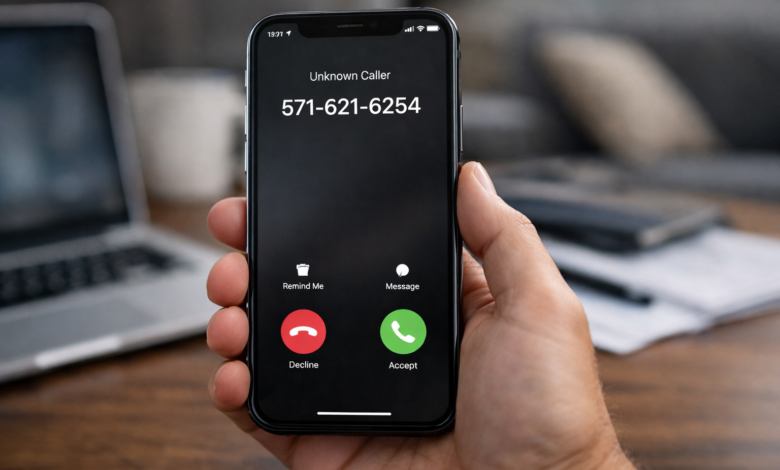
In an age where our phones rarely stop buzzing, a single unfamiliar number can feel strangely powerful. It interrupts our day, lingers in our call log, and quietly demands attention. 5716216254 is one of those numbers. It appears without warning, often leaves no voicemail, and sends people straight to search engines looking for answers.
This article is written without external searching or databases. Instead, it draws from real-world patterns, human behavior, and the shared experience millions of people have with unknown phone numbers. The goal is not to sensationalize 5716216254, but to understand why it triggers concern, curiosity, and a strong need for clarity.
What does this number really represent? Why are so many people looking it up? And what should you do if it appears on your screen? Let’s explore these questions calmly, logically, and in depth.
Why a Single Number Like 5716216254 Can Cause Immediate Concern
When your phone rings and the number is unfamiliar, your mind reacts faster than logic. You may feel a brief spike of anxiety or curiosity. That reaction is deeply human. Phone calls are personal; they cut through our physical space and demand our attention in real time.
5716216254 feels unsettling not because of what it is, but because of what it isn’t. It isn’t saved in your contacts. It isn’t labeled with a business name. It arrives without context. In a world where most meaningful calls are expected or scheduled, surprise calls stand out.
This sense of uncertainty is amplified by modern experiences with scams, spam, and robocalls. Many people have learned—sometimes the hard way—that answering the wrong call can lead to stress, wasted time, or worse. So when 5716216254 appears, the instinct to pause and investigate kicks in immediately.
The Modern Phone Landscape That Created Numbers Like 5716216254
To understand 5716216254, you need to understand the environment it exists in. Today’s phone ecosystem is dominated by automation. Call centers, dialers, customer service systems, surveys, reminders, and marketing platforms make millions of calls every hour.
In this environment, numbers are tools. They are assigned, rotated, masked, or even imitated. A number like 5716216254 could be part of an automated system making brief contact attempts. It could also be a real person using a temporary or work-related line.
The problem is that the same technical tools used for efficiency are also used for deception. This overlap blurs the line between legitimate and suspicious calls. As a result, people no longer trust unknown numbers by default. Searching the number becomes a modern survival instinct.
Why People Search for 5716216254 Instead of Calling Back
Years ago, missing a call usually meant calling back. Today, the behavior has changed. When people see 5716216254, they often choose to search first. This shift reflects a broader change in how we manage risk.
Calling back an unknown number can confirm that your phone line is active, which may lead to more calls. It can also connect you to automated systems designed to keep you engaged. Searching, on the other hand, feels safer. It allows you to gather information without exposing yourself.
People also trust collective experience. If many others have searched 5716216254, it suggests a pattern. Patterns provide reassurance. Even if no definitive answer appears, knowing you’re not alone reduces fear and confusion.
What 5716216254 Might Represent in Practical Terms
Without relying on external databases, we can still understand what 5716216254 most likely represents by observing common call behaviors. Unknown numbers generally fall into a few broad categories.
Some are functional calls—delivery confirmations, appointment reminders, or service notifications. These calls are usually brief and often leave voicemails. Others are outreach calls—surveys, promotions, or informational messages. These may hang up if unanswered.
Then there are nuisance calls. These include robocalls and spam attempts that rely on volume rather than interaction. Numbers like 5716216254 often belong to this category when they call repeatedly without leaving messages.
Finally, there are deceptive calls. These aim to provoke fear or urgency. While the number itself does not prove malicious intent, repeated unexplained calls are a reasonable cause for caution.
The Emotional Weight of Repeated Calls From 5716216254
Even when nothing “bad” happens, repeated calls from 5716216254 can take a toll. The phone becomes a source of tension. You may feel distracted, irritated, or uneasy without knowing why.
This emotional response is important. It shows how deeply communication tools are tied to our sense of safety. A ringing phone once symbolized connection. Now, for many people, it symbolizes intrusion.
Understanding this helps you respond more intentionally. Instead of reacting emotionally, you can treat 5716216254 as data—something to observe, assess, and manage calmly.
What Your Phone’s Behavior Tells You About 5716216254
Sometimes, your phone gives subtle clues. Does 5716216254 call once and disappear? Does it call repeatedly? Does it hang up immediately? These patterns matter.
A single missed call with no follow-up often indicates automation. Repeated calls at similar times may suggest a campaign. Immediate hang-ups can indicate number validation systems checking which lines are active.
If 5716216254 never leaves a voicemail, that is also informative. Legitimate callers usually want to be heard. Silence often signals that the call’s purpose does not require real interaction.
How to Respond Smartly When 5716216254 Appears
The smartest response to 5716216254 is not dramatic. It is measured. Let the call go to voicemail. Observe the pattern. Avoid immediate engagement.
If the number calls repeatedly and disrupts your day, blocking it is reasonable. Blocking is not an admission of fear—it is a boundary. Modern phones are designed to give users control, and using those tools is part of healthy digital behavior.
Most importantly, never provide personal information to unsolicited callers. Even if a call sounds convincing, pause. Legitimate organizations do not punish caution.
Why Numbers Like 5716216254 Are Part of a Bigger Digital Shift
5716216254 is not unique. It is one example of a broader shift in communication. As systems become more automated, human attention becomes more valuable. That makes your time—and your trust—worth protecting.
People are adapting. They research. They compare experiences. They share warnings. This collective awareness is reshaping how calls are perceived and handled.
The rise in searches for numbers like 5716216254 reflects growing digital maturity. People are no longer passive recipients of communication. They are active gatekeepers.
What Searching for 5716216254 Says About You as a User
If you are reading this, it means you chose curiosity over impulse. That matters. It shows awareness and self-respect. You did not immediately assume danger, nor did you blindly engage.
Searching for 5716216254 is an act of self-protection. It is also an act of learning. Each time someone investigates an unknown number, they strengthen their ability to navigate a complex digital world with confidence.
This behavior represents a quiet but meaningful cultural shift—from reactive to reflective communication habits.
Conclusion: From a Random Call to Informed Confidence
At the end of the day, 5716216254 is just a number. But the reaction it creates reveals something deeper about modern life. We live in a world where access is easy, trust is fragile, and attention is constantly under pressure.
By choosing to learn instead of panic, you turn uncertainty into clarity. You may never know exactly who or what was behind5716216254, and that’s okay. What matters is that you responded thoughtfully.
The real value of articles like this is not in labeling a number, but in empowering people. Awareness is strength. Caution is wisdom. And information—used calmly and responsibly—is the best defense we have.
Read also: 4806518272: Complete Lookup, Origin, and User Reports